Premium Buyers Research Before They Buy. Are You in the Running?
Why the purchase decision is rational, and how to be in the consideration set before it happens.
 Manno NotermansFounder at Think Orion · 5 min read
Why the purchase decision is rational, and how to be in the consideration set before it happens.
Manno NotermansFounder at Think Orion · 5 min read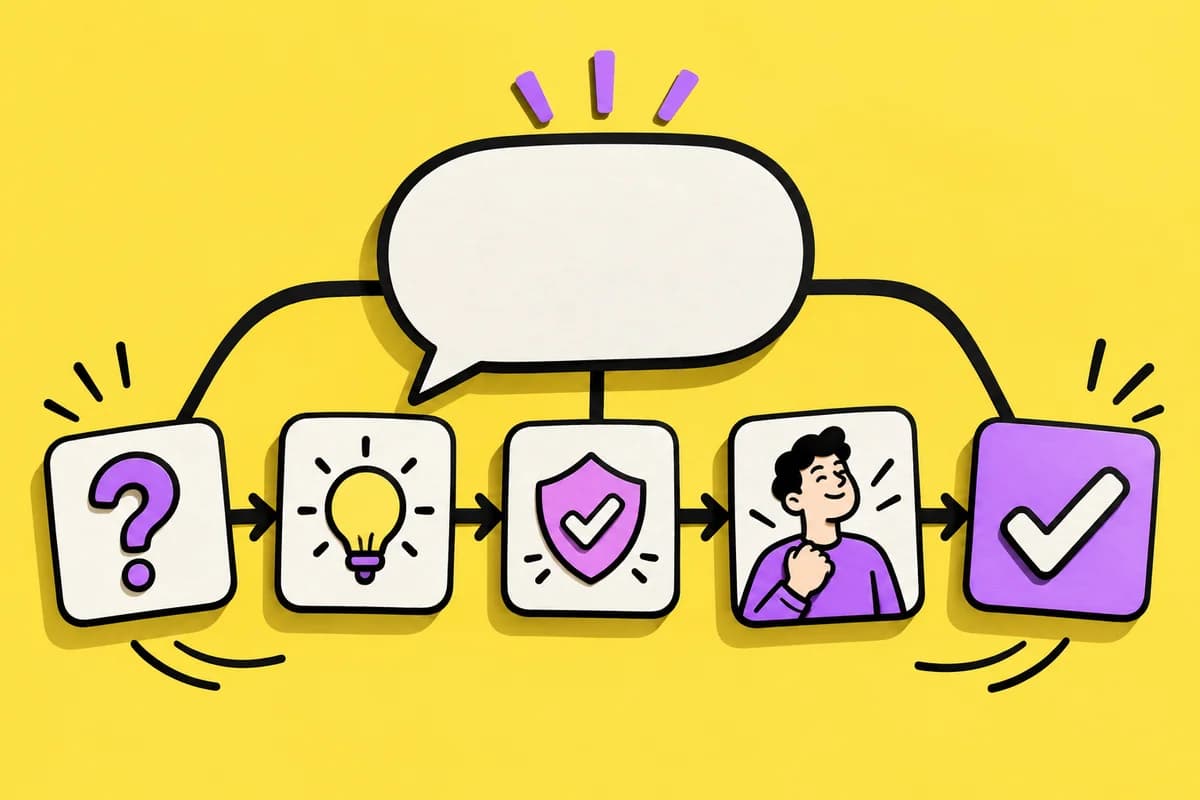
Premium coaching and education decisions are not impulse buys. A coaching program, a mentorship, a certification — these are purchases people research over weeks or months.
They read your content. They watch your videos. They compare you to other options they found before you. They talk to people who have bought something similar. Then they act.
Your job is to be one of their top options well before they make that decision.
Your future client does not wake up one day and buy. They move through a sequence.
First, something shifts. A stalled business. A skill gap. A problem they have been ignoring. They become aware they have a challenge worth solving.
Then they look for answers. They search for terms that name their situation. They find content from several coaches and educators. They compare ideas without contacting anyone.
Then they narrow the field. Not through ads. Through trust. The coaches who showed up consistently, spoke directly to the problem, and never felt pushy earn a spot on the short list.
Then they choose.
If you are not in the field they are scanning during that research phase, you are not on the list. By the time they are ready to act, the decision is largely made.
Most coaching business marketing is built around launch moments. An open offer. A webinar. A deadline. A countdown.
These tactics assume people are ready to buy when you are ready to sell. Some are. Most are not.
The people who buy in a launch were almost always already warm before it opened. They had been watching, reading, and learning from you. The launch gave them a clear moment to act. The decision had been building long before.
The people who do not buy are usually not uninterested. They just are not ready. They need more minutes.
When your entire strategy is built around launches, you only speak to people who are already warm. You leave the research phase empty. And someone else fills it.
Being in the consideration set is simpler than it sounds. It means your future client has encountered your thinking a few times before they make a decision.
They watched a video. They read something that stuck with them. They saw you answer a question in a way that clicked. A colleague mentioned your name.
You do not need a massive audience. You need to show up in the right places with real substance. One solid piece of content that addresses the exact problem your buyer has is worth more than a hundred posts that talk to no one in particular.
"The goal is not to be seen by everyone. It is to be trusted by the right people before they are even looking."
Use free tools to inspect your learner journey and choose where to focus next. No account needed.
Explore free tools →Premium buyers make rational decisions. They need a case.
Not a pitch. A case. Evidence that you understand their situation, have a system that works, and can point to real outcomes.
Content builds that case piece by piece. A post that names a real problem they have. A video that explains your method at a level that earns respect. An article that shows the thinking behind your approach. A client result that matches their situation.
Each of those is a mind minute. Each one moves them further toward the purchase.
When you get to the moment they reach out, you are not starting from zero. You are finishing a case you have been building for weeks.
For programs above a few thousand dollars, research windows of three to six months are common. The person who buys in January may have first found your work in September.
That means the content you publish today is not for your current launch. It is for one that has not happened yet.
Most coaches judge content by how many leads it generates this week. But the person who saved your post in September and reached out in January is the whole point of the exercise.
The research window requires patience. Not blind patience. But patience with the gap between planting and harvesting.
The purchase decision feels easy when it is the logical end of a long process of building trust.
Your buyer has seen your thinking. They have heard the method. They understand what they are buying and why it is different from the alternatives. They have resolved most of their own objections through content you published before they ever contacted you.
The call or the application is just the final step in a journey that started long before.
When buyers say a purchase felt right, this is usually what they mean. Not that a pitch was compelling. That the case was complete before the ask arrived.
The question is not how to get more leads. It is whether the research journey your buyer goes on leads to you.
Map it out. When someone first notices the problem your offer solves, what do they search for? What content do they find? Are any of those pieces yours?
Then work backwards. Create the content that belongs in that journey. Answer the questions they are asking in the first weeks of research. Explain your approach at a level that shows you know what you are talking about. Point them to the next step without making a hard ask.
Do that consistently and you will be in the running. Once you are there, the purchase almost follows on its own.
Use free tools to inspect your learner journey and choose where to focus next. No account needed.
Explore free tools →
I write about building belief, earning useful attention, and closing the gap before the ask. The freshest thinking lands on LinkedIn first.