One program. A shared plan for enrollment.
Connect program managers, marketing, and admissions around who each program fits, what prospective students need to understand, and what your teams learn from each intake.
Each tap is a real moment of attention. Stack them.
Program go-to-market, applied to a cohort intake or a recurring admissions cycle.
 ★
 ●
 ★
 ●
 ★
 ●
 ★
 ●
 ★
 ●★●★●★●★●★●
Five documents, three owners
Give program managers, marketing, and admissions one shared plan for the next intake.
Program managers
Program facts & evidence
Mind Minutes
One program. A shared plan.
Agree the focus. Build understanding. Test and learn together.
Marketing
Audience & campaigns
Admissions
Decisions & feedback
Program managers
Validate who the program serves, entry requirements, workload, delivery, and the outcomes the evidence supports.
Marketing
Research student situations, build the argument and content, and run tests with agreed budgets and decision criteria.
Admissions
Assess suitability, explain unresolved questions, and bring decision context and progression back into the next test.
- Program truth sheet
- Program managers validate entry requirements, learning, fees, duration, workload, delivery, and verified outcomes. Record claims the evidence cannot yet support.
- Student situation map
- Marketing and admissions investigate the role, trigger, desired change, alternatives, hesitation, previous encounters, and how people consume content.
- Brief per campaign focus
- Agree one student situation, the argument, missing beliefs, evidence, destination, and next step. Name the people responsible.
- Shared vault
- Keep the beliefs, explanation of how change happens, proof, opinions, and stories together. This internal source feeds ads, pages, events, and admissions. Students never need to visit it.
- Test and learning record
- Marketing records the hypothesis, audience, budget, period, and criteria. Admissions adds suitability and progression. The teams decide what to deepen, revise, or stop.
For each cohort, confirm available seats, application and start dates, qualification criteria, campaign budget, owners, and review dates. Bring the learning into the next intake.
Each team sees a different part of the decision.
Program managers know the educational reality. Marketing sees campaign response. Admissions hears why people consider, hesitate, or decide. The program needs a shared way to use that evidence.
The audience is disputed
and campaigns proceed before the team agrees which student situation to investigate.
The proof is scattered
so content misses useful evidence or makes claims the program cannot yet support.
Admissions repeats the basics
while questions from calls rarely make it into the next campaign brief.
Each intake starts again
without a clear record of the focus, test, decision criteria, and findings.
A shared go-to-market method for each program
Mind Minutes brings program facts, student situations, useful content, and admissions evidence into one working process. Use it to agree what to test and what to change together.
Establish the foundation
Validate program facts, entry requirements, commitment, and proof. Investigate student situations with admissions.
Validate or discover a focus
Test a clear hypothesis when evidence exists. When the audience is broad or disputed, investigate distinct situations before committing to one.
Build the missing understanding
Map the beliefs, argument, and evidence. Use a shared internal vault to feed ads, pages, events, and admissions conversations.
Test and learn together
Agree the budget, period, qualification criteria, and owners. Review suitable inquiries and progression, then deepen, branch, or revise.
What becomes clearer across the teams
One method, different program contexts
Executive education cohorts
Agree seats, application deadlines, qualification criteria, and review dates around a specific intake.
Continuing education portfolios
Reuse the working process while preserving each program’s student situations, argument, and evidence.
Institutes and universities
Give program managers, marketing, and admissions shared documents and a recurring program review.
Programs with rolling admissions
Use a recurring review period to learn from decisions and improve content and follow-up as students arrive.
Resources for education teams
Selected specifically for leaders improving enrollment across an education or training organization. Share them with the team, use them in planning, and turn the useful ideas into operating habits.
Practical tools for clarifying value, aligning execution, and making the economics of learning visible across teams.
 About 5 minutes
The Brief
Turn the Mind Minutes into a brief someone can actually execute.
Open resource →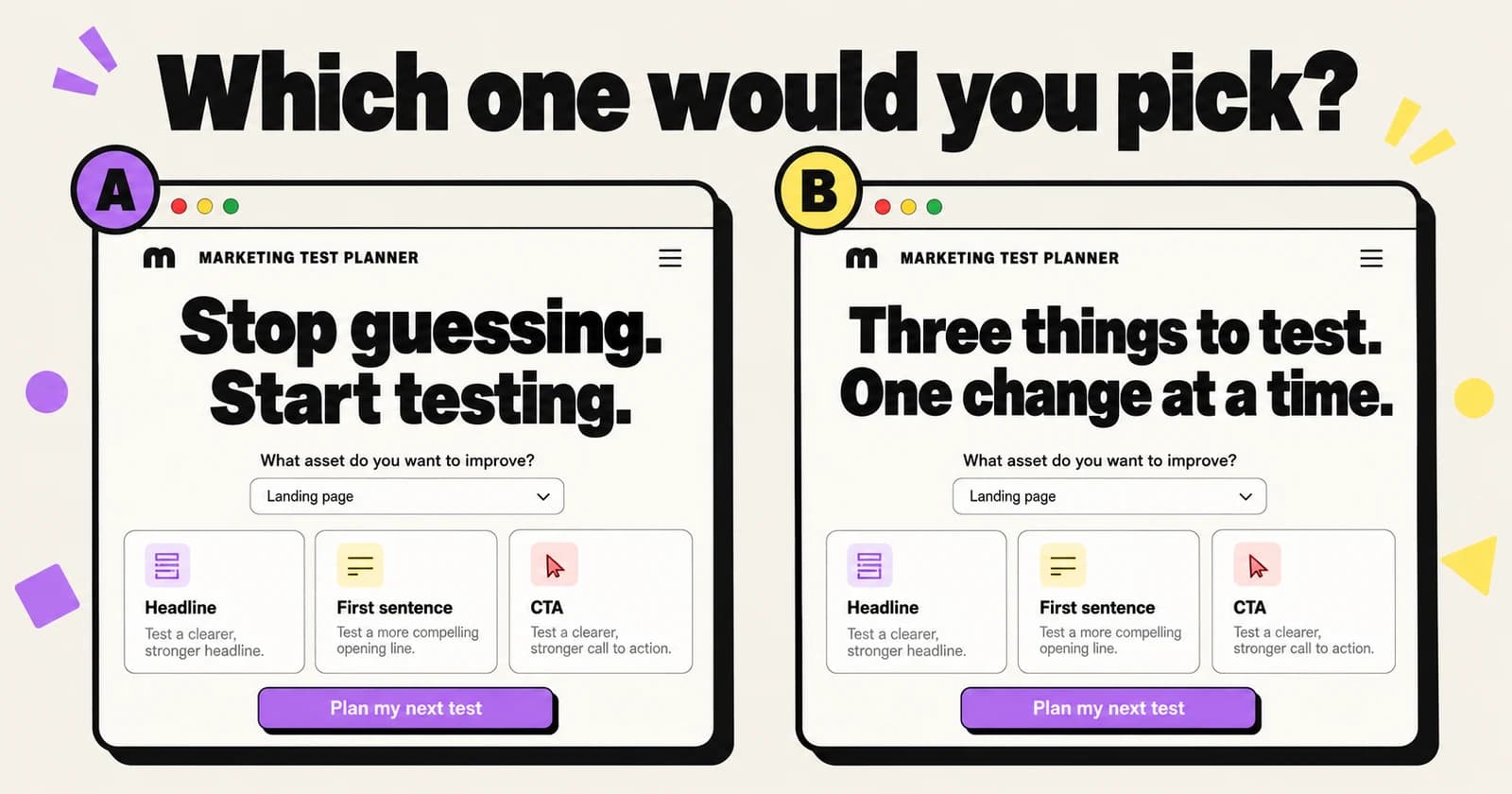 About 5–10 minutes
Marketing Test Planner
Three things to test. One change at a time.
Open resource →Creative Allocation Planner
Find the focus. Then brief the creative.
Open resource →Give your next intake a shared plan.
Tell us how your programs and teams work today. Start with one program, the decisions you need to make, and the evidence each team can contribute.
Let’s talk about your team →We will reply within one business day.